Czernowitzer Zeitung (CZ): Tell us about the beginning of your creative biography...
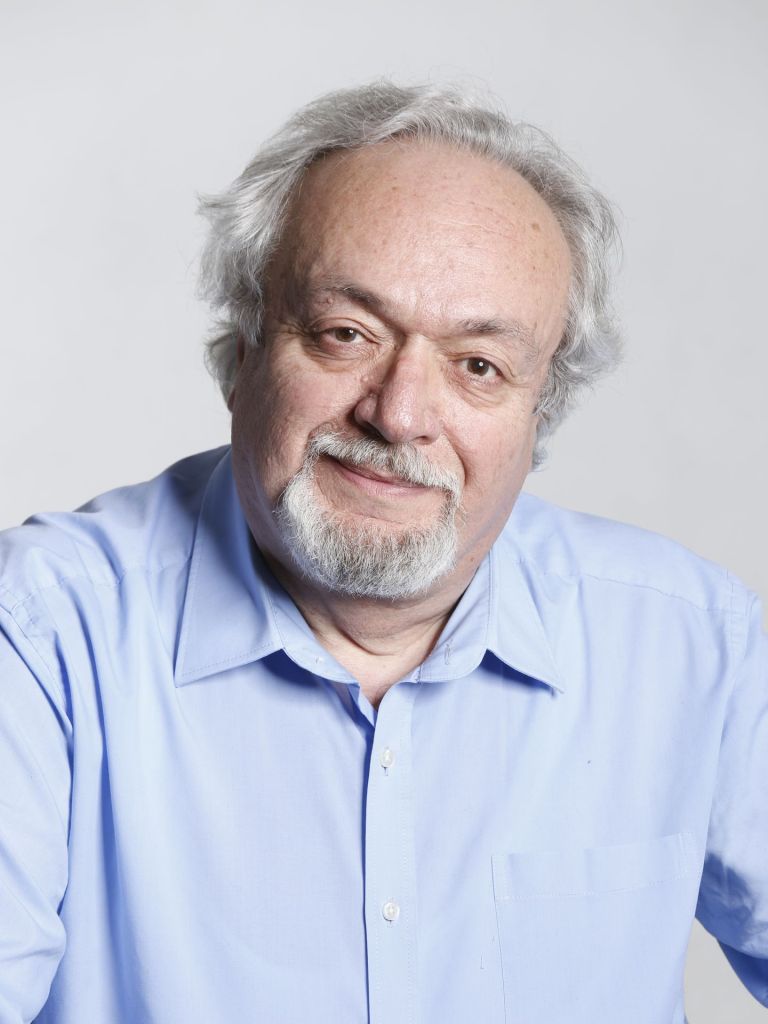
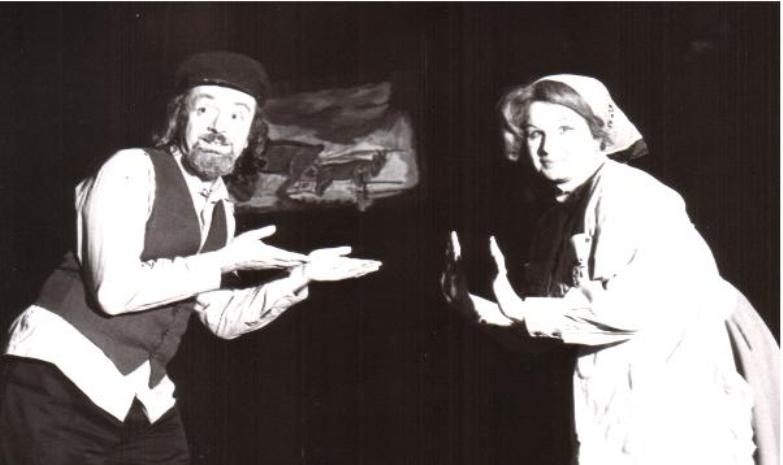
Mark Bazijan: To be honest, I don't know when my creative biography began. In Chernivtsi we lived on Kotlyarevsky Street, not far from the theater and the Palace of Culture of Textile Workers, which used to be the Jewish People's House, and my first theatrical impressions are connected with them. I don't remember what I watched in the theater, I was four years old, only the shock of the stage illuminated by a magical yellow light, on which stood a house and autumn trees. And in the Palace of Culture I saw a puppet show "Aladdin's Magic Lamp", and I was shocked by the genie played by a man. He grew above the screen - huge, scary, next to him Aladdin was very small. And I decided: I will be an artist! Adults, laughing, asked: "You will probably be an honored artist?", and I answered: "I don't know if I will be honored, but I will definitely be an artist." Who would have thought that many years later I would be playing on this stage with my Jewish theater!
And then at the age of 5 I was taken to Lviv.
CZ: You worked as a director of a Jewish theater in Ukraine for many years. What are the main differences between theater in Ukraine and Germany? How popular is theater art in Germany now?
Mark Bazijan: There are many differences. But the most important can be deduced even from the definition. If we are not talking about musical theater, then in Germany it is called Sprechtheater, that is, conversational theater. German actors focus on pronouncing the text, often forgetting about its active purpose. As a result, the text is heard, but often indistinct. In general, the concept of "action" is often understood as a mechanical movement. From some directors you can hear: "Well, go to the window, we need more action." This has nothing to do with the concept of "action" according to Stanislavsky. Very often, actors find it difficult to understand what subtext is, and they play the direct meaning of words. And although yoga and tai chi are sometimes taught in German theater schools, actors do not always master stage movement, gestures, and do not know how to wear historical costumes. With the current fashion for modernization (which has already become a cliché no less than the dusty wings of an old theater), this is not noticeable until you have to act in historical costumes, especially in films. Emotionality and sensitivity, especially characteristic of the Ukrainian theater, are rare here. In addition, there is no unity in theatrical methodology: representatives of different theater movements teach at the same time. It is believed that this will make the actor more flexible.
CZ: You teach acting in Germany. Tell us about this work of yours.
Mark Bazijan: I teach according to the Stanislavsky system, which many have heard of, but understand little about it. It is very difficult to teach not to try to portray someone on stage, but to be that person. Many people want recipes on how to play a particular state or emotion: how to cry, how to laugh, how to get angry. I have to disappoint them: there are no recipes, you need to create conditions for the feeling to arise, and not squeeze it out of yourself. I have already talked about the subtext. Many people find it difficult to understand that the same text, for example, "I love you", can mean anything: "Leave me alone", and "I'm in trouble", and "Sleep well", and "Forgive me", and anything at all, depending on the action and situation.
Unfortunately, we have to deal with poorly educated people who have read little. But judging by the stories of, for example, Shirvindt, this is not only a problem in Germany now. You give them an example from classical drama, and it turns out that it is a blank shot.
CZ: Having starred in many German films, you have the opportunity to evaluate German cinema from the inside. What is its level now? How competitive is it in terms of quality against the backdrop of Hollywood expansion?
Mark Bazijan: I got into German cinema almost by accident. I read an advert for a Russian-speaking actor, conducted an electronic casting, i.e. I filmed the proposed scene on my phone and got a cameo role Russian major in the film "Georg" about the famous German actor Heinrich Georg. This role was played by his son, Goetz Georg, also a movie star. Then there were other roles.
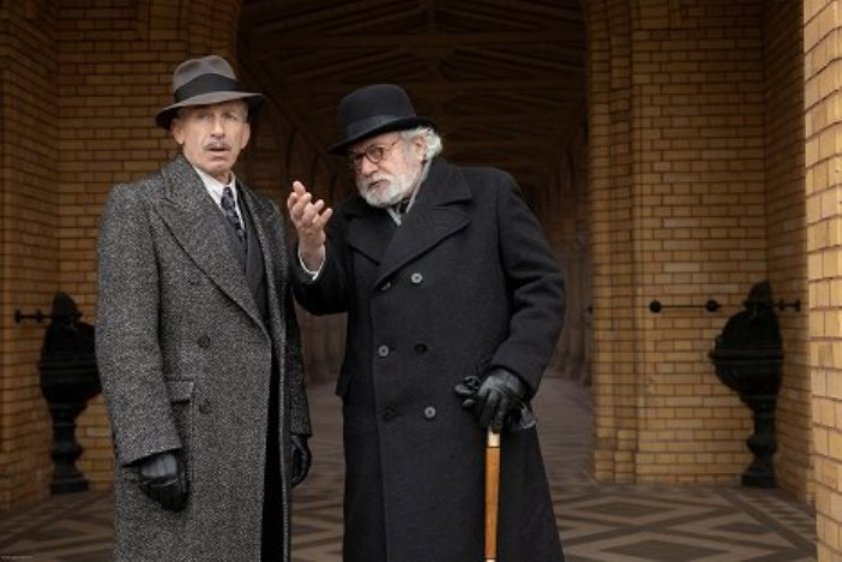
The level of cinema here is not the same. There are series that are put on stream, where not much is required from the actor. And there are high-class films with thoughtful, serious work of all workshops. For example, for one scene of the series "Babylon Berlin" I needed a tailcoat. So it was specially sewn by a French tailor, and I flew to fittings from Munich to Berlin, of course, at the company's expense. In general, the attitude towards actors is very attentive. If the shooting is not in the studio, each actor has his own trailer where his costumes are prepared, there is water, a couch so he can rest. (When I first saw this, I remembered how, as a student, I saw the great Yevstigneyev on the set of "Old Robbers," who fell asleep in the pavilion behind the wall of the scenery while the lighting was being installed on the set.) It is interesting that during lunch, German actors are given large "bibs" so that their costumes do not get dirty. Everything is democratic in the group, both the "stars" and the directors stand in line for lunch together with the make-up artists and lighting technicians. The best films, of course, are not inferior to Hollywood ones. By the way, many American films are shot in Germany. It is cheaper for them that way.
CZ: Which of your roles in German cinema was the most interesting for you?
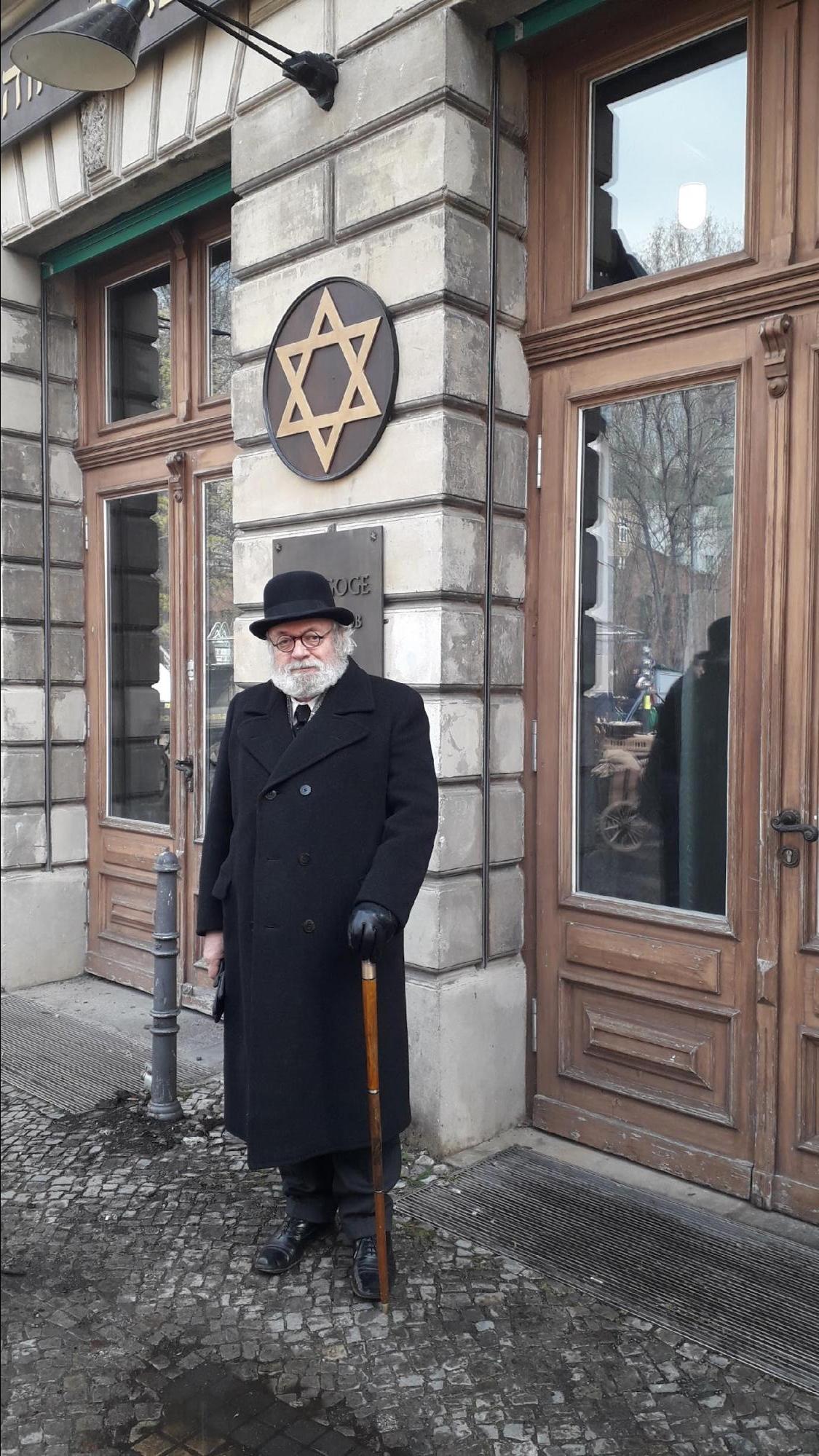
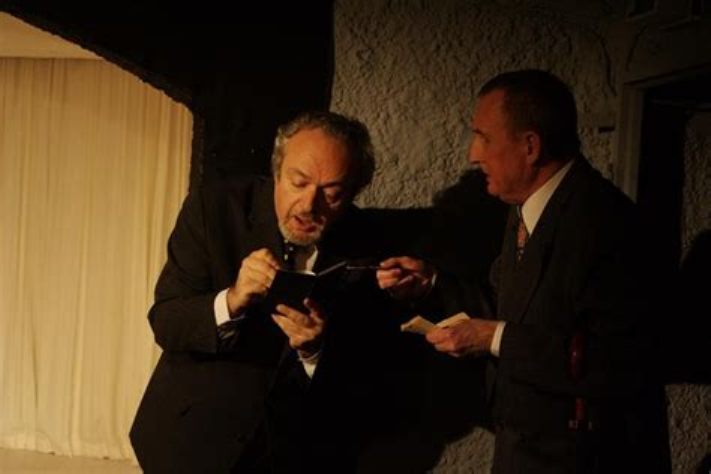
Mark Bazijan: So far, the most interesting role is Jacob Grun in the German series "Babylon Berlin." Firstly, because I play 90% of the role in Yiddish. (By the way, I did the translation myself). Secondly, an interesting character: a respectable jeweler from high society, who encounters the anti-Semitic antics of fascist youth. His nephew from America, Avraham Goldstein, who turns out to be a gangster, comes to his aid. It is he who fights back against the unbridled youth. This role was played by the Israeli-American actor Mark Ivanir, who was also born in Chernivtsi, and to whose mother Itzik Manger dedicated his poems. I had scenes with Mark Ivanir in Yiddish.
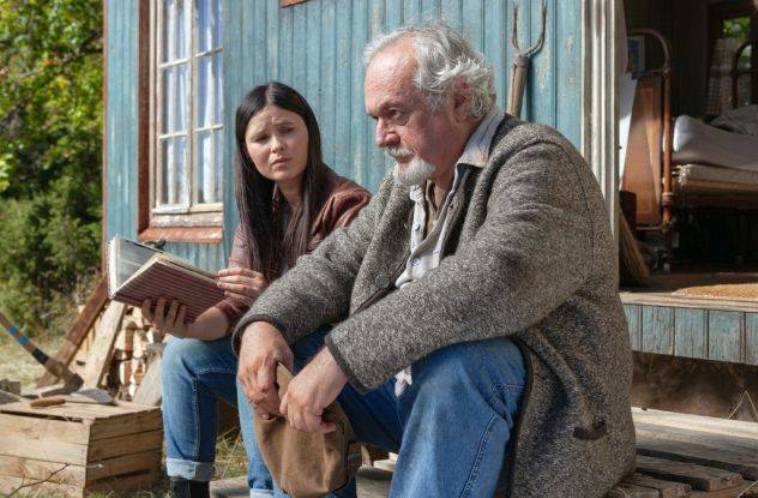
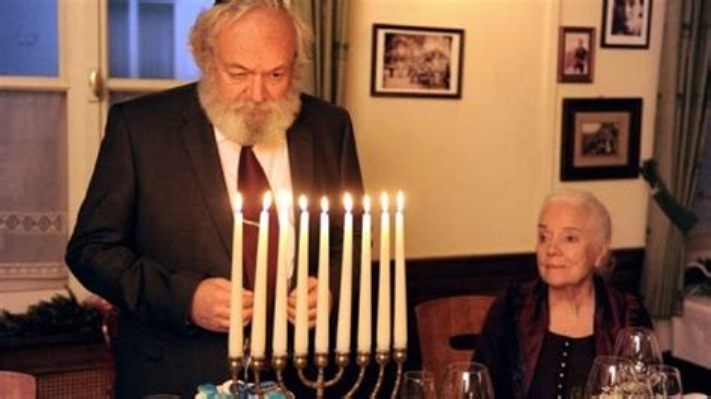
An interesting role was in the series "Dahoam is Dahoam". I played a 90-year-old Israeli, Yakov Kohn, who comes to the Bavarian village where he was born and from where he fled with his family during the years of fascism. He meets his childhood friend Teresa, who helped them hide.
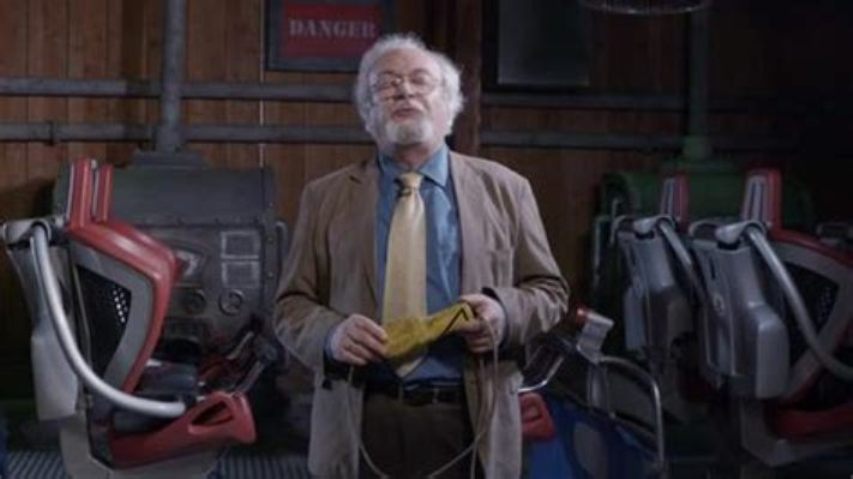
And then there was the eccentric Professor Nikolaev in the series of short films for Europa-Park "Die Erstflug-Theorie" ("The Theory of the First Flight"). He enjoyed great popularity. In this role, I improvised a lot and joked.
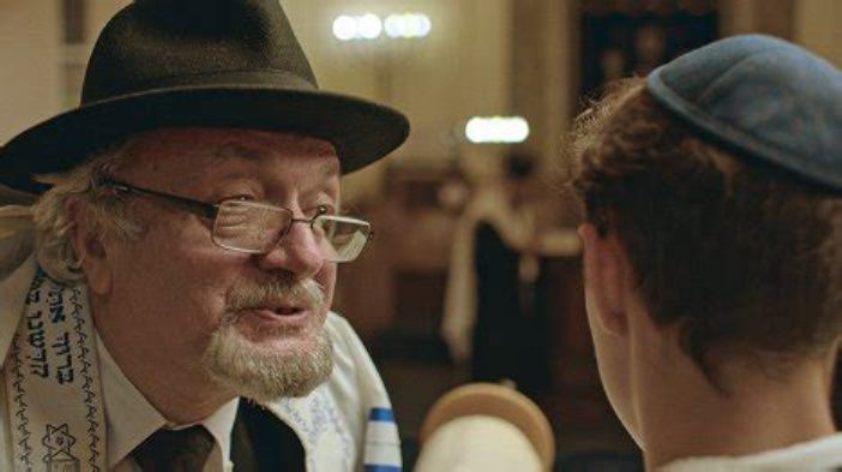
I played the hero's grandfather in the film "Cocktail Masel Tov", which won many awards at festivals around the world.
CZ: What new trends in theater and cinema would you note?
Mark Bazijan: I don't want to complain, but modern trends, when a director, instead of revealing the author, turns a play or film into a means of self-expression and self-affirmation, do not fascinate me. Unable to penetrate the life of the human spirit, directors and actors often chase originality, which is most often expressed in "nudity", tricks and "modernization", which has already become a cliché and is forgotten even before the viewer leaves the hall. As a result, photographs of different performances and different theaters look like photographs of one performance. I haven't experienced such shocks as after "Now Silence" with the great Ranevskaya and Plyatt for a long time.
CZ: Actor and director. What are the main qualities, in your opinion, that a good actor and director should have today?
Mark Bazijan: The main thing is the culture of the creator and the scale of his personality, so that his statement from the stage touches the heart. And not formal "innovations". At one time, it was an unthinkable innovation that Mikhoels played King Lear without a beard. And he gave it up not for the sake of innovation, but because it prevented him from building Lear's development from an old man with a mossy and false ideology to the owner of new knowledge, to youth. And his Lear died not from decrepitude or illness, but full of strength, lay down next to the dead Cordelia and kissed her, as one kisses a mezuzah - with the touch of his fingers. This could have been invented by studying Shakespeare in depth, having a huge cultural background.
CZ: Many years ago, the question was raised about the decline in the cultural level of the public, its demands (for example, the words of Marcello Mastroianni on this topic come to mind). What is your opinion now on this matter?
Mark Bazijan: The cultural level of the public falls when creators, instead of developing the viewer and raising him to their level, descend to his level, trying to please him. The attitude of "what would you like?" is death for art. Fellini, whose alter ego was Mastroianni, did not care whether his films would be understood. He spoke about painful things in a language that can only be understood by a viewer who wants to think. A viewer who likes to watch movies with popcorn will get up and leave, stepping on the toes of other viewers. But a thoughtful viewer will understand.
You have to start with childhood. What cartoons do they watch, what songs do they listen to, etc. Pope John Paul II, who was no friend of the Soviet Union, recommended showing children Soviet cartoons so that they would grow up to be good people.
CZ: Chernivtsi is your hometown. What are your childhood memories of post-war Chernivtsi?
Mark Bazijan: Well, what can a five-year-old remember? I remember the huge stone lions in the Palace of Culture of Textile Workers... I remember the very adult (for me at the time) beautiful and cheerful people walking along Kobilyanska. I remember the stone bearded men on Lenin Street, propping up the balcony. Cellars with a sign "Wine".
I remember how my dad took me to the synagogue. I think it was the holiday of Simchat Torah. They brought out the Torah in red velvet, with a crown on top. I touched it with my hand and kissed the fingers, like everyone else.
I remember the Jewish market, where my grandmother had a photo booth with a three-legged camera that my grandfather made from a plywood parcel box. There was a polyphonic and multilingual choir. Yiddish was heard. Not only Jews spoke it. Moldovan, Russian, Ukrainian were heard. All this was mixed up, but everyone understood each other. Women were called "madam": Madame Bluma, Madame Khona, Madame Broche.
And they visited each other. And the tables were set, and each hostess tried to outdo the other. There were no special delicacies, but they tried to serve them beautifully. I remember my mother made mushrooms from hard-boiled eggs with half a tomato. They brought a gramophone with records. They danced. The owner of the gramophone was like a king.
In childhood and youth, I often came to Chernivtsi, because my grandparents lived there, there were many relatives and acquaintances. It was necessary to visit everyone, to see. Some I saw almost for the first time. I remember one question: "What, you don't remember me?! I was at your circumcision!" But over time, many died, many emigrated.
CZ: You personally knew Chernivtsi Jewish actors of the past. What does Chernivtsi mean to you in terms of creative and friendly contacts? Are you still connected with your hometown?
Mark Bazijan: In the 90-s I came to Chernivtsi on tour. Now I have no contacts with the city.
In Germany, when they ask what kind of city Chernivtsi is, I answer that it is the city where the German poets Paul Celan and Rosa Ausländer were born.
Mikhail Krasovsky (Chernivtsi Jewish newspaper "Czernowitzer Zeitung")